
Rebel at stagnation
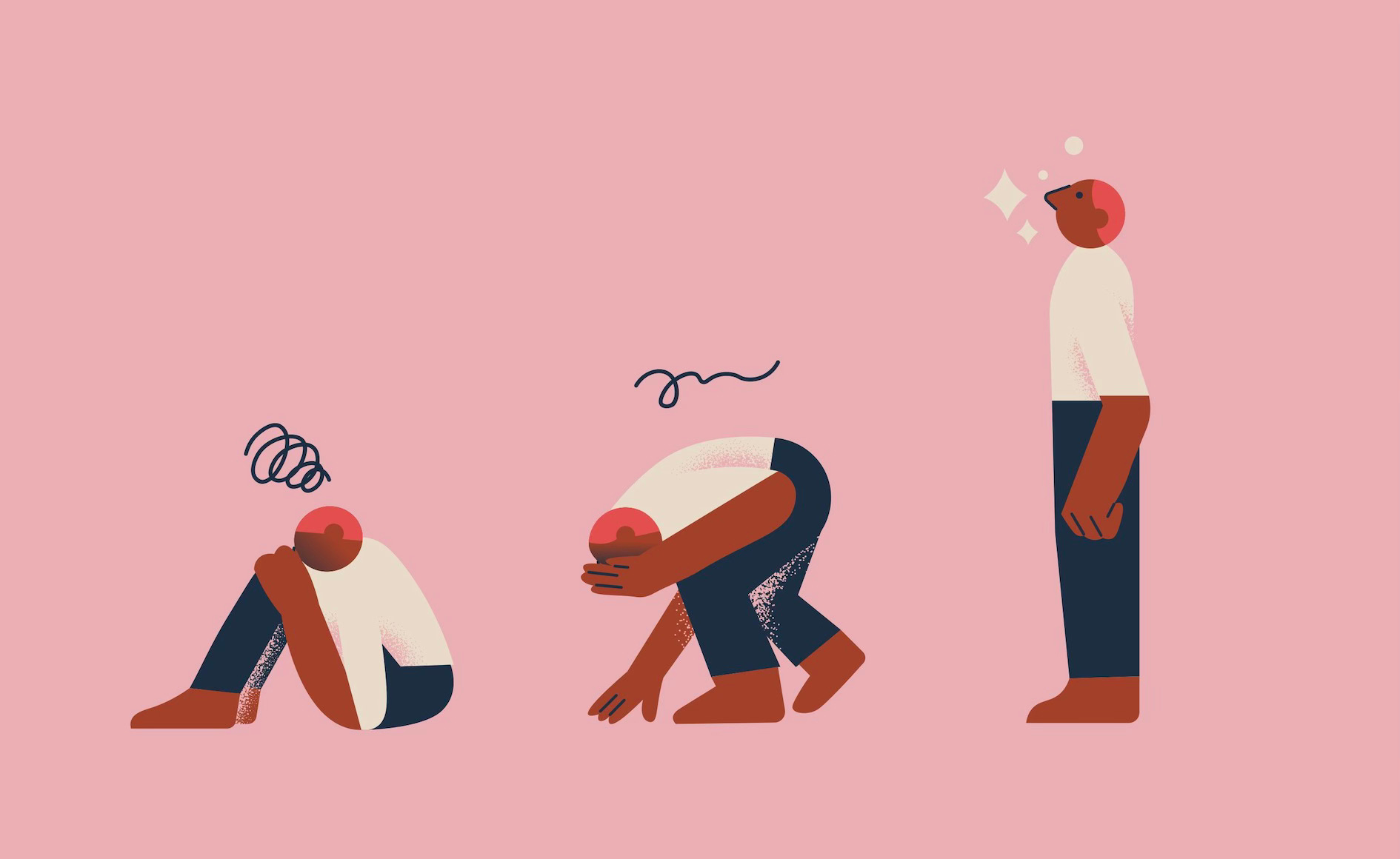
Everyone goes through these stages in life

Welcome, curious minds,
You’re reading Personal Growth Wisdom Newsletter — actionable ideas from great minds on practical philosophy, psychology, productivity and self improvement to build a career or life you love.
A quick intro.
I’ve started writing for Fast Company on life and career success. My recent three pieces are The surprising power of being a generalist, 4 habits to outsmart your own biases and How to network so you’re impossible to ignore.
I’m an accidental writer.
I started writing to share what I’m learning. It’s helping me fight off stagnation like a plague. Everything I learn feeds my notes engine. Ideas in my notes then become potential stories and posts. It’s a thrilling experience. I totally enjoy it.
It’s now a cycle.
Learn. Write. Publish. Repeat.
That process is how I overcome mental stagnation. It’s one of the many things I do to disrupt my routine on purpose. It’s a win-win. I learn and share what I find in public.
I will always have something to share as long as I keep learning something new. I enjoy the process so much that I’m making it a lifelong habit.
Eddie Cheng was right, “The most addictive drug in the world isn’t cocaine, heroin, or alcohol. It’s comfort.”
Life is a curious paradox.
It’s either exhilarating growth or crippling stagnation. The experiences that shape and teach us can also lull us into a comfortable bubble.
Daily routines, rituals, and habits can dull your curiosity and blind you to life’s hidden wonders. They can quickly shrink your world, confining you to the familiar, the predictable, the safe.
Life can also mask stagnation with busyness.
You rush from one task to another, filling your days with obligations and commitments. You become very attached to your schedule and to-do list. But busyness is not the same as fulfilment. It can be a clever disguise, masking a lack of direction and purpose.
You tell yourself you’re “settling into a comfortable routine” and “getting things done,” when in truth, you’re slowly turning into an exhibit of your former self.
You convince yourself that stability is safety, stagnation is serenity. You trade the thrill of doing something different for the predictability of the mundane.
You wake, work, eat, sleep, repeat. The days blur, the weeks melt, and suddenly, years have slipped by, leaving you wondering, “Where did the time go?” What have I been doing with my time?
Author Leo Tolstoy wrote in his book Family Happiness, “I had begun to feel that life was a repetition of the same thing; that there was nothing new either in me or in him; and that, on the contrary, we kept going back as it were on what was old.”
Studies show a correlation between stagnation and an increased risk of depression and anxiety. It contributes to feelings of hopelessness, boredom, and a lack of sense of purpose.
The price of stagnation is too high to ignore
You become a spectator in your own life, watching the world pass by from the safe yet stifling confines of your routine.
Structure is essential to get real things done. While efficiency is great, an autopilot lifestyle can steal your agency. You stop actively choosing your path and become a passenger in your own life.
How do we maximise life’s dynamism without succumbing to its comfort circle?
Start with awareness.
Recognise the warning signs. The lack of real interest, taking the obvious for granted, and the dwindling curiosity.
The antidote to stagnation is hidden in our daily experiences. There are opportunities to break the mold, to step outside the lines we’ve so carefully drawn all around us.
When I’m getting too comfortable, I step off my routine on purpose to notice more, think differently, or try something completely new. Sometimes, it’s working in a new environment. A lot of the time, it’s taking time to appreciate the ordinary I overlook.
I take ownership of my routine.
I also seek discomfort, not for its own sake, but as a catalyst for growth. I read books on topics I know little about on purpose. I recently started reading Carlo Rovelli’s Seven Brief Lessons on Physics. He explains Physics beautifully.
I’m nurturing my curiosities.
Every unfamiliar step is a crack in the wall of stagnation. I like what Author Arthur Conan Doyle said in The Sign of Four (Sherlock Holmes):
“My mind,” he said, “rebels at stagnation. Give me problems, give me work, give me the most abstruse cryptogram or the most intricate analysis, and I am in my own proper atmosphere. I can dispense then with artificial stimulants. But I abhor the dull routine of existence. I crave for mental exaltation. That is why I have chosen my own particular profession, or rather created it, for I am the only one in the world.”
Find the space where growth and comfort coexist
Overcoming stagnation is about finding the balance. It’s not about completely abandoning comfort or plunging headfirst into the unknown.
Think of it as a cycle.
Growth is uncomfortable as you learn and adapt. However, as you master new skills and experiences, your comfort zone expands. You attempt even greater growth without feeling as overwhelmed.
So, nurture your interests. Everything you care about can guide you towards new experiences. Shake things up. But it doesn’t have to be a total disruption.
A gentle nudge is all you need to get started.
What once set your soul on fire? Was it writing, creative art, painting, coding, music, or a hobby you always wanted to explore? Reconnecting with your curiosities infuses life with meaning and purpose.
Push yourself beyond the familiar, even if it feels scary. Let your mind wander, follow its whims, and see where it leads you. It forces you to adapt, learn, and grow, reigniting the spark of curiosity and engagement.
“Life is a process of becoming, a combination of states we have to go through. Where people fail is that they wish to elect a state and remain in it. This is a kind of death.”— Anaïs Nin
Life is a gift, but it requires active participation.
The greatest danger is not failure but stagnation. You are not meant to live on autopilot. Don’t let life lull you into a slumber of stagnation. Step off the quicksand, dust yourself off, and start living your extraordinary life.“ There are three ingredients in the good life: learning, earning and yearning,” notes Christopher Morley.
Concepts worth understanding
Revenge Bedtime Procrastination
You don’t want the night to end and the dreaded morning to begin, so you procrastinate going to bed, as if by doing so you can prevent tomorrow ever coming. But tomorrow *will* come, and if you don’t sleep well, it’ll hit you all the harder.
Solomon's Paradox
“We're better at solving other people's problems than our own, because detachment yields objectivity. But Kross et al. (2014) found viewing oneself in the 3rd person yields the same detachment, so when trying to help yourself, imagine you're helping a friend.”
‘Mood follows action!’
Often, I find myself ‘not in the mood’ to do something (e.g. a much-needed exercise). But just as often, I’m surprised to find that my mood changes in a positive direction once I’ve started. Taking action has a powerful effect.
Pieces of advice worth passing on
Don’t get stuck on the details.
Only allowing the perfect version of something to see the light of day can not only hinder progress, it may even stop you from doing your best work. Focus on speed and iteration: build, show your work, learn, improve.
Whenever you feel stuck or out of options, just do something... do anything.
Don’t wait for the ‘right’ or ‘perfect’ thing. By making a decision and getting moving, you shake off the ‘stuck’ feeling and good change usually follows.
Doing nothing is an active decision.
Sometimes we don’t want to make a choice, so we don’t. But staying silent on something you believe in or staying in a job or career you’re not sure about isn’t doing ‘nothing’. Rather, you’re making an active choice. Often it’s worth taking a risk.
Don’t worry about an honest mistake.
Ponder the reason for it and learn from it. Progress at your own speed from simple job to something more difficult, but never force the pace. At the same time, be just as ambitious as your previous work warrants.
Food for thought from me (free read on Medium)
>Everyone Goes Through These Stages In Life
As a kid, I took in other people’s rules. Parents, teachers, and even random adults who thought they knew better. I didn’t question much because I didn’t even know there was something to question. I was going through the first stage of life. The absorber stage. At this stage, survival is the rule. Do the homework. Pass the test. Nod when they tell you “that’s just the way it is.”
The people closest to you pass on “what to think.”
Free books on doing life right
> My best newsletter recommendations
Have a look at our favourite picks → Topics covered: learning, finance, starting up, productivity, technology, career, better living, seo, venture capital and more.
Explore the complete list of newsletters
Until Next Week,
Be Well.
Thomas Oppong | The Thinking Edge | The Kaizen Method